Speaking & Master Facilitation That Saves Lives
In moments of crisis, panic is the direct byproduct of a missing plan. Paul Dutton does not deliver dry, textbook presentations. He brings the raw, unfiltered realities of first-response operations to the stage, teaching corporate executives, school administrators, real estate professionals, and community leaders how to make critical decisions when systems go dark.
From high-impact virtual webinars to full-scale, hands-on command workshops, Paul's sessions provide attendees with the exact tools and steps needed to ensure operational survival.
Paul Dutton
Master Facilitator & Keynote Speaker
As an LASD CERT Coordinator, certified CSTI Instructor, and veteran Red Cross disaster responder, Paul has spent 25 years preparing thousands of Californians for catastrophic fires, earthquakes, and active-threat situations.
Keynotes • Seminars • Interactive Workshops
Speaking & Master Facilitation That Saves Lives
In moments of crisis, panic is the direct byproduct of a missing plan. Paul Dutton does not deliver dry, textbook presentations. He brings the raw, unfiltered realities of first-response operations to the stage, teaching corporate executives, school administrators, real estate professionals, and community leaders how to make critical decisions when systems go dark.
From high-impact virtual webinars to full-scale, hands-on command workshops, Paul's sessions provide attendees with the exact tools and steps needed to ensure operational survival.
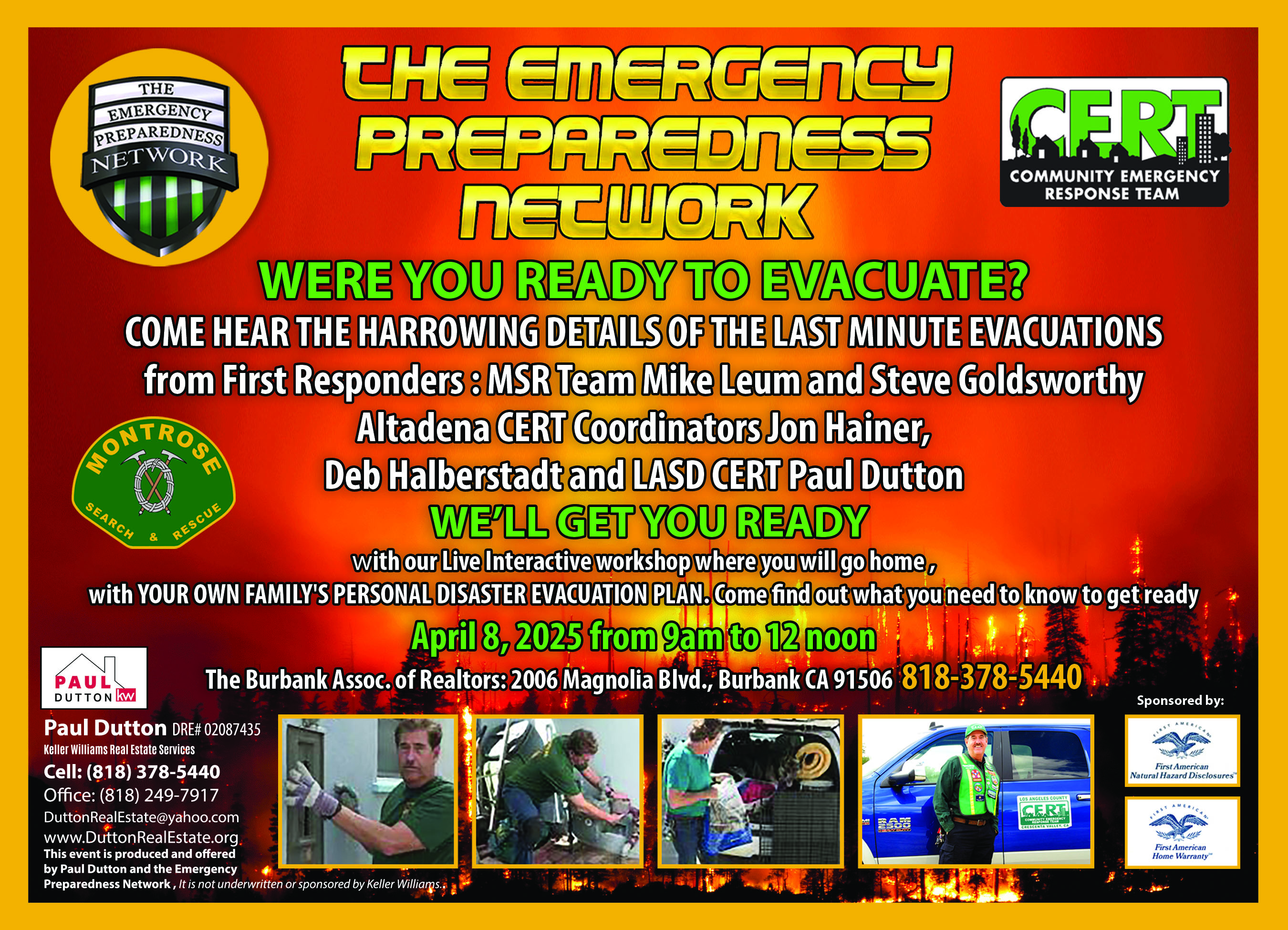
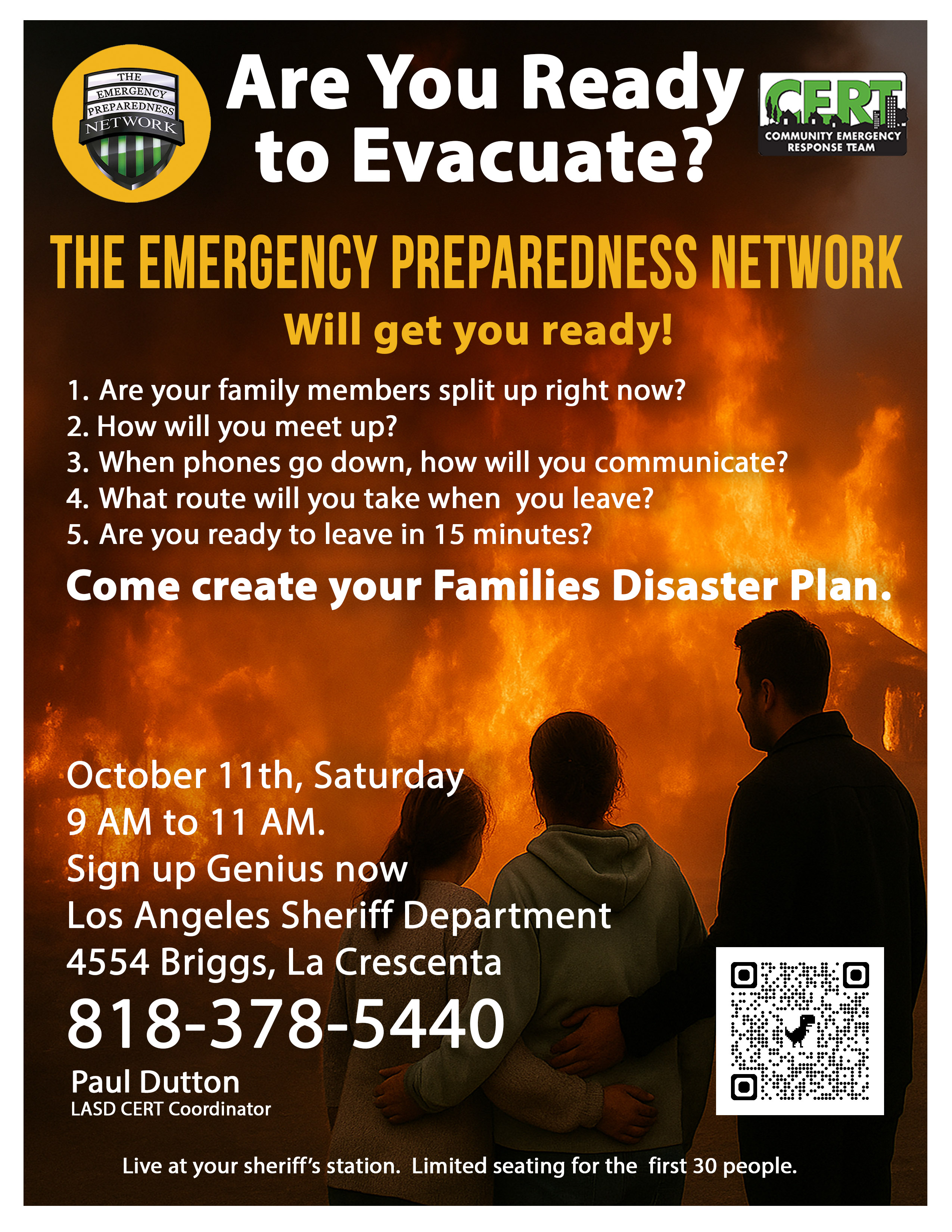
Past Events
TESTIMONIALS
“During the two decades I have known him, Paul has proven himself to be a dedicated leader [...] he has taught literally thousands of individuals about Emergency Preparedness Management and training for CERT.”
Mack Duggar
35-year Red Cross Volunteer &
Red Cross Incident Commander for Rose Parade, First Aid Services

Keynote Presentations & Interactive Masterclasses
Field-tested risk mitigation, institutional leadership, and tactical emergency readiness frameworks for corporations, municipal communities, and families.
LIVE INTERACTIVE WORKSHOPS
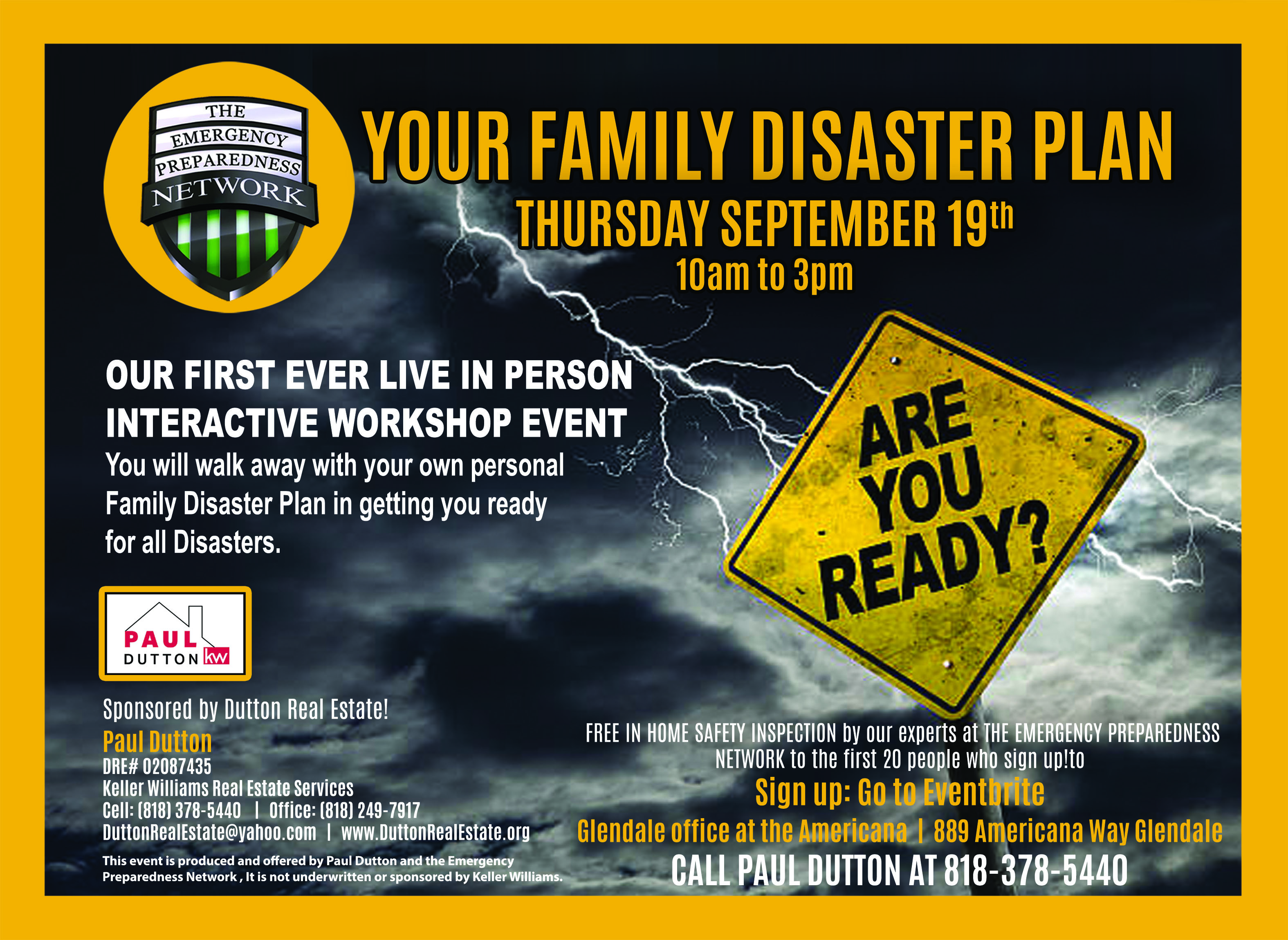
Family Disaster Plans
1. First Steps to Getting Prepared Now - AHEAD OF TIME!
2. Why We're Not Ready for the Disasters We Don't See Coming
3. Designing Your Own Custom Family Disaster Plans
- How to Get Ready
- Utilities Shut Off
- Sheltering in Place
Family Reunification Plan
- How to Reunite
- Family Communication Tools
Family Evacuation Plans
- Deciding When to Evacuate
- Evacuation Routes
The Reality
Disaster rarely announces itself, and it almost never strikes when your entire family is safely gathered under one roof. In a real-world California emergency—whether a sudden wildland fire, major seismic event, or sudden utility loss—family members are routinely split across schools, workplaces, and transit routes. When cellular towers overload and power grids fail, hesitation and panic become the greatest threats to human safety. Hope is not a strategy; an engineered, practiced plan is.
The Presentation Overview
In this engaging, highly interactive masterclass, 25-year emergency management veteran Paul Dutton transitions participants out of passive listening and into active preparation. Drawing on his extensive experience as an LASD CERT Coordinator and Red Cross instructor, Paul demystifies household emergency planning into a clear, step-by-step physical framework.
Rather than leaving attendees with a list of abstract ideas, this workshop guides every participant through filling out and finalizing their own Family Disaster & Evacuation Plan live during the session.
Tangible Attendee Deliverables
Completed Household Plan: Participants walk out the door holding a finalized, actionable Family Disaster & Evacuation Plan tailored to their specific home layout.
The 15-Minute Checklist: A printable, step-by-step physical packing and evacuation checklist ready to be mounted inside home garage or exit doors.
Family Comms Card: Compact, wallet-sized offline contact templates for every child and adult in the household.
KEYNOTE PRESENTATIONS
The Importance of Getting Prepared Ahead of Time
1. Why We're Not Ready
A. "It Won't Happen to me!"
B. Why do we learn more on how to put on a seatbelt than how to be prepared?
C. Preparedness or Panic
The Reality
Society and the press lead us to believe a dangerous myth that the 72-Hour Kit is all you need. As if the fairy god mother is going to come down after three days, wave her magic wand, and make everything go back to normal. We are going to teach you that you're going to need a 30-day kit just to start with. There is so much more that people have not been taught when it comes to Emergency Preparedness.
The Presentation Overview
We are going to learn that there's a lot more to Emergency Preparedness than duck, cover, and hold on. In these presentations, Paul draws on 30 years of experience to enlighten people as to the seriousness and the reality of true disasters. The audience will walk away with a new understanding of how important it is to get ready ahead of time.
Core Curriculum & Deep-Dive Modules
Module 1: Why Can't You Evacuate in 15 Minutes?
Module 2: Fire Evacuations - What You Need to Know
MASTERCLASSES
Your Own Emergency Response and Action Plans for Evacuation
1. Incident Command System (ICS)
2. Community Emergency Response Team Training
3. Interagency Strategic Planning
4. Emergency Operations Plans (EOPs)
The Reality
The reality is that most schools and organizations are not prepared for disasters. They usually have never been taught on disaster preparedness and most of them feel they can just dial 911 in an emergency. The reality is, in a major disaster, Emergency Services are not coming for your school or organization and may very well be on their own for days in a major disaster. Now what?
The Presentation Overview
Paul draws on 30 years of experience and 25 years with the Sheriff's Department and 15 years with the American Red Cross, and brings all that knowledge into these masterclasses. Paul goes into the stark realities for schools and organizations of how badly these disasters can affect life and property. He also goes into the apathy that so many of us have about disasters - all of us thinking it just won't happen to us!
The 15-Minute Family Shield:
How to Build a Bulletproof Household Disaster & Evacuation Plan
Session Formats: Interactive Hands-On Masterclass | Keynote Presentation | Corporate Employee Wellness Workshop
Ideal Audience: Parents, PTA/PTO Leadership, Corporate Wellness Programs, HOA Communities, Faith-Based Organizations, Civic Groups
The Reality
Disaster rarely announces itself, and it almost never strikes when your entire family is safely gathered under one roof. In a real-world California emergency—whether a sudden wildland fire, major seismic event, or sudden utility loss—family members are routinely split across schools, workplaces, and transit routes. When cellular towers overload and power grids fail, hesitation and panic become the greatest threats to human safety. Hope is not a strategy; an engineered, practiced plan is.
The Presentation Overview
In this engaging, highly interactive masterclass, 25-year emergency management veteran Paul Dutton transitions participants out of passive listening and into active preparation. Drawing on his extensive experience as an LASD CERT Coordinator and Red Cross instructor, Paul demystifies household emergency planning into a clear, step-by-step physical framework.
Rather than leaving attendees with a list of abstract ideas, this workshop guides every participant through filling out and finalizing their own Family Disaster & Evacuation Plan live during the session.
Core Curriculum & Deep-Dive Modules
Module 1: The 15-Minute Egress Rule & Rapid Packing
Learn how to construct "Grab-and-Go" survival vaults for every family member—including pets—and master the physical preparation needed to evacuate your residence within 15 minutes without panic.
Module 2: Offline Communications & No-Cell Connectivity
Discover how to establish out-of-state contact trees, utilize low-bandwidth messaging, and deploy tactical family meeting protocols when cellular networks and data towers completely black out.
Module 3: Dual-Zone Reunification Logistics
Map out primary and secondary meeting locations based on real-world disaster variables, ensuring every household member knows exactly where to go if neighborhood access is blocked.
Module 4: Home Hazard Mitigation & Utility Control
Master the safe, manual shut-off procedures for natural gas, main water lines, and electrical breakers to prevent post-disaster house fires and structural loss.
Module 5: Vital Document Encryption & Protection
Build a portable, physical-and-digital emergency vault containing essential identification, insurance policies, and medical records needed for immediate post-disaster recovery.
Tangible Attendee Deliverables
Completed Household Plan: Participants walk out the door holding a finalized, actionable Family Disaster & Evacuation Plan tailored to their specific home layout.
The 15-Minute Checklist: A printable, step-by-step physical packing and evacuation checklist ready to be mounted inside home garage or exit doors.
Family Comms Card: Compact, wallet-sized offline contact templates for every child and adult in the household.
15 Minutes to Egress:
Building Fire-Ready, Decisive Communities Before the Grid Goes Dark
Session Formats: High-Energy Keynote | Municipal Town Hall Seminar | HOA Leadership Workshop
Ideal Audience: Homeowners Associations (HOAs), Municipal Boards, Real Estate Associations, Community Watch Organizations, Civic Leadership Assemblies
The Reality
In California’s wildland-urban interface, wildfires do not wait for ideal conditions. When Red Flag warnings transition into active fire fronts, high winds drive flames faster than municipal warning systems can dispatch alerts. The fatal flaw in most neighborhood disaster scenarios isn't a lack of emergency services—it is civilian delay. Waiting for a neighbor to pack, waiting for official door-knocks, or delaying departure until smoke blinds the street leads directly to gridlocked escape routes.
The Presentation Overview
Designed for community associations, civic leaders, and municipal town halls, this high-impact keynote directly addresses the psychological barriers that cause people to freeze during critical incidents. Paul Dutton breaks down first-responder decision-making tools into accessible, civilian-focused action steps.
Paul teaches neighborhoods how to read environmental warning signs, prepare properties days before wind events arrive, and execute decisive, early evacuations that keep roadways open for incoming fire and sheriff apparatus.
Core Curriculum & Deep-Dive Modules
Module 1: Dismantling Civilian Hesitation ("Who Made You the Expert?")
Examine the psychological phenomenon of social proof during emergencies and adopt the "Don't Wait to Be Told" mindset necessary for surviving wildland-urban interface fires.
Module 2: The 72-Hour Pre-Incident Window
How to monitor atmospheric conditions, Red Flag warnings, and local news 3 days before a potential threat to systematically stage vehicles, pets, and supplies before an alert is issued.
Module 3: Egress Logistics & Navigating Roadway Bottlenecks
Learn how to select primary and secondary evacuation routes out of canyons and suburban tracts, navigate smoke-blinded roads, and manage vehicle staging during high-density neighborhood departures.
Module 4: Property Hardening & Pre-Departure House Lockdown
Execute rapid, 10-minute structural prep—including ember mitigation, utility isolation, and perimeter access clearance—that gives firefighters the best chance of defending your home.
Module 5: Neighborhood Mutual Aid & Resource Mapping
Establish informal, hyper-local communication networks between adjacent homes to verify that vulnerable elderly neighbors or pet owners are cleared out safely.
Key Keynote Takeaways
Early Egress Protocol: Clear situational criteria that dictate exactly when to leave—hours before official mandatory evacuation orders are declared.
Red Flag Action Plan: A standardized 3-day countdown framework for managing homes during high-wind and severe wildfire weather.
Neighborhood Synergy: Strategies for HOAs and community boards to implement standardized egress mapping across entire housing developments.
Unified Command in Chaos:
How Institutional Leaders and First Responders Coordinate Under Fire
Session Formats: Executive Keynote | C-Suite Retreat Workshop | Command Staff Strategic Facilitation
Ideal Audience: Corporate Executives, School District Superintendents, Municipal Directors, Corporate Risk Managers, Public Assembly Venue Operators
The Reality
When a critical incident strikes a commercial facility, private campus, or public assembly venue, the first 60 minutes dictate both the survival of building occupants and the ultimate legal liability of the organization. During a crisis, private management teams must instantly interface with incoming Sheriff, Fire, and EMS divisions. When internal facility leaders use proprietary jargon, lack clear incident command roles, or operate without verified emergency plans, communication breaks down—exposing leadership to catastrophic civil negligence lawsuits under California law.
The Presentation Overview
In this executive keynote and strategic facilitation session, Paul Dutton bridges the gap between corporate fiduciary responsibility and tactical, field-level incident command. Utilizing his credentials from the California Specialized Training Institute (CSTI) and FEMA, Paul demonstrates how institutional leaders can deploy standard Incident Command System (ICS) structures inside their corporate operations.
Paul walks executives through California’s strict regulatory controls—including California Education Code Sections 32280-32289, Cal/OSHA Title 8, and the Workplace Violence Prevention Act (SB 553 / Labor Code Section 6401.9)—showing how operational preparedness acts as an absolute legal shield against tort liability.
Core Curriculum & Deep-Dive Modules
Module 1: Fiduciary Responsibility & Tort Shielding (CA Civil Code 1714)
Understand how maintaining updated, site-specific safety plans, documented staff instruction, and recorded occupant drills satisfies the common-law duty of care and protects leadership from "Negligence Per Se" claims.
Module 2: The Incident Command System (ICS) for Executives
Structure your corporate or campus leadership team into scalable ICS roles (Incident Command, Operations, Planning, Logistics) to maintain complete operational control during crisis events.
Module 3: Multi-Agency Interoperability & Plain-Language Rules
Eliminate internal codes, jargon, and proprietary terms. Deploy standard, plain-language radio and communication channels that allow your personnel to communicate seamlessly with arriving first responders.
Module 4: Real-World Campus Case Study (The Westridge School Model)
Examine EPN's multi-zone campus deployment, detailing how 6 search and triage teams, 6 extraction units, and color-coded medical zones safely managed operations across three independent radio frequencies.
Module 5: Commercial Insurance Alignment & Risk Mitigation
Learn how presenting verified safety plans, active drill logs, and fire clearances protects your organization during property and liability insurance renewals in California's restrictive insurance market.
Key Keynote Takeaways
Regulatory Compliance Map: Direct alignment strategies for Cal/OSHA Title 8 Section 3220, California Labor Code 6401.9 (SB 553), and Education Code mandates.
Unified Command Blueprint: A practical organizational framework for establishing a functional Command Post and interfacing directly with municipal Incident Commanders.
Executive Risk Reduction: Concrete steps to turn mandatory safety documentation into an evidence-backed defense against legal claims.
Keynote Presentations & Interactive Masterclasses
Field-tested risk mitigation, institutional leadership, and tactical emergency readiness frameworks for corporations, municipal communities, and families.
LIVE INTERACTIVE WORKSHOPS
Helping You Build Your Family Disaster Plan
Session Formats: Interactive Hands-On Masterclass | Keynote Presentation | Corporate Employee Wellness Workshop
Ideal Audience: Parents, PTA/PTO Leadership, Corporate Wellness Programs, HOA Communities, Faith-Based Organizations, Civic Groups
The Reality
Disaster rarely announces itself, and it almost never strikes when your entire family is safely gathered under one roof. In a real-world California emergency—whether a sudden wildland fire, major seismic event, or sudden utility loss—family members are routinely split across schools, workplaces, and transit routes. When cellular towers overload and power grids fail, hesitation and panic become the greatest threats to human safety. Hope is not a strategy; an engineered, practiced plan is.
The Presentation Overview
In this engaging, highly interactive masterclass, 25-year emergency management veteran Paul Dutton transitions participants out of passive listening and into active preparation. Drawing on his extensive experience as an LASD CERT Coordinator and Red Cross instructor, Paul demystifies household emergency planning into a clear, step-by-step physical framework.
Rather than leaving attendees with a list of abstract ideas, this workshop guides every participant through filling out and finalizing their own Family Disaster & Evacuation Plan live during the session.
Core Curriculum & Deep-Dive Modules
Module 1: The 15-Minute Egress Rule & Rapid Packing
Learn how to construct "Grab-and-Go" survival vaults for every family member—including pets—and master the physical preparation needed to evacuate your residence within 15 minutes without panic.
Module 2: Offline Communications & No-Cell Connectivity
Discover how to establish out-of-state contact trees, utilize low-bandwidth messaging, and deploy tactical family meeting protocols when cellular networks and data towers completely black out.
Module 3: Dual-Zone Reunification Logistics
Map out primary and secondary meeting locations based on real-world disaster variables, ensuring every household member knows exactly where to go if neighborhood access is blocked.
Module 4: Home Hazard Mitigation & Utility Control
Master the safe, manual shut-off procedures for natural gas, main water lines, and electrical breakers to prevent post-disaster house fires and structural loss.
Module 5: Vital Document Encryption & Protection
Build a portable, physical-and-digital emergency vault containing essential identification, insurance policies, and medical records needed for immediate post-disaster recovery.
Tangible Attendee Deliverables
Completed Household Plan: Participants walk out the door holding a finalized, actionable Family Disaster & Evacuation Plan tailored to their specific home layout.
The 15-Minute Checklist: A printable, step-by-step physical packing and evacuation checklist ready to be mounted inside home garage or exit doors.
Family Comms Card: Compact, wallet-sized offline contact templates for every child and adult in the household.
Disaster Preparedness awakening
The Importance of Getting Prepared Ahead of Time
Session Formats: High-Energy Keynote | Municipal Town Hall Seminar | HOA Leadership Workshop
Ideal Audience: Homeowners Associations (HOAs), Municipal Boards, Real Estate Associations, Community Watch Organizations, Civic Leadership Assemblies
The Reality
In California’s wildland-urban interface, wildfires do not wait for ideal conditions. When Red Flag warnings transition into active fire fronts, high winds drive flames faster than municipal warning systems can dispatch alerts. The fatal flaw in most neighborhood disaster scenarios isn't a lack of emergency services—it is civilian delay. Waiting for a neighbor to pack, waiting for official door-knocks, or delaying departure until smoke blinds the street leads directly to gridlocked escape routes.
The Presentation Overview
Designed for community associations, civic leaders, and municipal town halls, this high-impact keynote directly addresses the psychological barriers that cause people to freeze during critical incidents. Paul Dutton breaks down first-responder decision-making tools into accessible, civilian-focused action steps.
Paul teaches neighborhoods how to read environmental warning signs, prepare properties days before wind events arrive, and execute decisive, early evacuations that keep roadways open for incoming fire and sheriff apparatus.
Core Curriculum & Deep-Dive Modules
Module 1: "It Won't Happen to Me"
Examine the psychological phenomenon of social proof during emergencies and adopt the "Don't Wait to Be Told" mindset necessary for surviving wildland-urban interface fires.
Module 2: The Myth of the 72-Hour Kit
How to monitor atmospheric conditions, Red Flag warnings, and local news 3 days before a potential threat to systematically stage vehicles, pets, and supplies before an alert is issued.
Module 3: Why We're Not Ready for the Disasters We Don't See Coming
Learn how to select primary and secondary evacuation routes out of canyons and suburban tracts, navigate smoke-blinded roads, and manage vehicle staging during high-density neighborhood departures.
Module 4: What Does Your Family Disaster Plan Look Like?
Learn how to select primary and secondary evacuation routes out of canyons and suburban tracts, navigate smoke-blinded roads, and manage vehicle staging during high-density neighborhood departures.
Key Keynote Takeaways
Early Evacuation Protocol: Clear situational criteria that dictate exactly when to leave—hours before official mandatory evacuation orders are declared.
Red Flag Action Plan: A standardized 3-day countdown framework for managing homes during high-wind and severe wildfire weather.
Neighborhood Synergy: Strategies for HOAs and community boards to implement standardized egress mapping across entire housing developments.
How will you respond to disaster?
Your Own Emergency Response and Action Plans for Evacuation
Session Formats: Executive Keynote | C-Suite Retreat Workshop | Command Staff Strategic Facilitation
Ideal Audience: Corporate Executives, School District Superintendents, Municipal Directors, Corporate Risk Managers, Public Assembly Venue Operators
The Reality
When a critical incident strikes a commercial facility, private campus, or public assembly venue, the first 60 minutes dictate both the survival of building occupants and the ultimate legal liability of the organization. During a crisis, private management teams must instantly interface with incoming Sheriff, Fire, and EMS divisions. When internal facility leaders use proprietary jargon, lack clear incident command roles, or operate without verified emergency plans, communication breaks down—exposing leadership to catastrophic civil negligence lawsuits under California law.
The Presentation Overview
In this executive keynote and strategic facilitation session, Paul Dutton bridges the gap between corporate fiduciary responsibility and tactical, field-level incident command. Utilizing his credentials from the California Specialized Training Institute (CSTI) and FEMA, Paul demonstrates how institutional leaders can deploy standard Incident Command System (ICS) structures inside their corporate operations.
Paul walks executives through California’s strict regulatory controls—including California Education Code Sections 32280-32289, Cal/OSHA Title 8, and the Workplace Violence Prevention Act (SB 553 / Labor Code Section 6401.9)—showing how operational preparedness acts as an absolute legal shield against tort liability.
Core Curriculum & Deep-Dive Modules
Module 1: Why Can't You Evacuate in 15 Minutes?
Understand how maintaining updated, site-specific safety plans, documented staff instruction, and recorded occupant drills satisfies the common-law duty of care and protects leadership from "Negligence Per Se" claims.
Module 2: Fire Evacuations - What You Need to Know
Structure your corporate or campus leadership team into scalable ICS roles (Incident Command, Operations, Planning, Logistics) to maintain complete operational control during crisis events.
Module 3: Multi-Agency Interoperability & Plain-Language Rules
Eliminate internal codes, jargon, and proprietary terms. Deploy standard, plain-language radio and communication channels that allow your personnel to communicate seamlessly with arriving first responders.
Module 4: Real-World Campus Case Study (The Westridge School Model)
Examine EPN's multi-zone campus deployment, detailing how 6 search and triage teams, 6 extraction units, and color-coded medical zones safely managed operations across three independent radio frequencies.
Module 5: Commercial Insurance Alignment & Risk Mitigation
Learn how presenting verified safety plans, active drill logs, and fire clearances protects your organization during property and liability insurance renewals in California's restrictive insurance market.
Key Keynote Takeaways
Regulatory Compliance Map: Direct alignment strategies for Cal/OSHA Title 8 Section 3220, California Labor Code 6401.9 (SB 553), and Education Code mandates.
Unified Command Blueprint: A practical organizational framework for establishing a functional Command Post and interfacing directly with municipal Incident Commanders.
Executive Risk Reduction: Concrete steps to turn mandatory safety documentation into an evidence-backed defense against legal claims.
The 15-Minute Family Shield:
How to Build a Bulletproof Household Disaster & Evacuation Plan
Session Formats: Interactive Hands-On Masterclass | Keynote Presentation | Corporate Employee Wellness Workshop
Ideal Audience: Parents, PTA/PTO Leadership, Corporate Wellness Programs, HOA Communities, Faith-Based Organizations, Civic Groups
The Reality
Disaster rarely announces itself, and it almost never strikes when your entire family is safely gathered under one roof. In a real-world California emergency—whether a sudden wildland fire, major seismic event, or sudden utility loss—family members are routinely split across schools, workplaces, and transit routes. When cellular towers overload and power grids fail, hesitation and panic become the greatest threats to human safety. Hope is not a strategy; an engineered, practiced plan is.
The Presentation Overview
In this engaging, highly interactive masterclass, 25-year emergency management veteran Paul Dutton transitions participants out of passive listening and into active preparation. Drawing on his extensive experience as an LASD CERT Coordinator and Red Cross instructor, Paul demystifies household emergency planning into a clear, step-by-step physical framework.
Rather than leaving attendees with a list of abstract ideas, this workshop guides every participant through filling out and finalizing their own Family Disaster & Evacuation Plan live during the session.
Core Curriculum & Deep-Dive Modules
Module 1: The 15-Minute Egress Rule & Rapid Packing
Learn how to construct "Grab-and-Go" survival vaults for every family member—including pets—and master the physical preparation needed to evacuate your residence within 15 minutes without panic.
Module 2: Offline Communications & No-Cell Connectivity
Discover how to establish out-of-state contact trees, utilize low-bandwidth messaging, and deploy tactical family meeting protocols when cellular networks and data towers completely black out.
Module 3: Dual-Zone Reunification Logistics
Map out primary and secondary meeting locations based on real-world disaster variables, ensuring every household member knows exactly where to go if neighborhood access is blocked.
Module 4: Home Hazard Mitigation & Utility Control
Master the safe, manual shut-off procedures for natural gas, main water lines, and electrical breakers to prevent post-disaster house fires and structural loss.
Module 5: Vital Document Encryption & Protection
Build a portable, physical-and-digital emergency vault containing essential identification, insurance policies, and medical records needed for immediate post-disaster recovery.
Tangible Attendee Deliverables
Completed Household Plan: Participants walk out the door holding a finalized, actionable Family Disaster & Evacuation Plan tailored to their specific home layout.
The 15-Minute Checklist: A printable, step-by-step physical packing and evacuation checklist ready to be mounted inside home garage or exit doors.
Family Comms Card: Compact, wallet-sized offline contact templates for every child and adult in the household.
15 Minutes to Egress:
Building Fire-Ready, Decisive Communities Before the Grid Goes Dark
Session Formats: High-Energy Keynote | Municipal Town Hall Seminar | HOA Leadership Workshop
Ideal Audience: Homeowners Associations (HOAs), Municipal Boards, Real Estate Associations, Community Watch Organizations, Civic Leadership Assemblies
The Reality
In California’s wildland-urban interface, wildfires do not wait for ideal conditions. When Red Flag warnings transition into active fire fronts, high winds drive flames faster than municipal warning systems can dispatch alerts. The fatal flaw in most neighborhood disaster scenarios isn't a lack of emergency services—it is civilian delay. Waiting for a neighbor to pack, waiting for official door-knocks, or delaying departure until smoke blinds the street leads directly to gridlocked escape routes.
The Presentation Overview
Designed for community associations, civic leaders, and municipal town halls, this high-impact keynote directly addresses the psychological barriers that cause people to freeze during critical incidents. Paul Dutton breaks down first-responder decision-making tools into accessible, civilian-focused action steps.
Paul teaches neighborhoods how to read environmental warning signs, prepare properties days before wind events arrive, and execute decisive, early evacuations that keep roadways open for incoming fire and sheriff apparatus.
Core Curriculum & Deep-Dive Modules
Module 1: Dismantling Civilian Hesitation ("Who Made You the Expert?")
Examine the psychological phenomenon of social proof during emergencies and adopt the "Don't Wait to Be Told" mindset necessary for surviving wildland-urban interface fires.
Module 2: The 72-Hour Pre-Incident Window
How to monitor atmospheric conditions, Red Flag warnings, and local news 3 days before a potential threat to systematically stage vehicles, pets, and supplies before an alert is issued.
Module 3: Egress Logistics & Navigating Roadway Bottlenecks
Learn how to select primary and secondary evacuation routes out of canyons and suburban tracts, navigate smoke-blinded roads, and manage vehicle staging during high-density neighborhood departures.
Module 4: Property Hardening & Pre-Departure House Lockdown
Execute rapid, 10-minute structural prep—including ember mitigation, utility isolation, and perimeter access clearance—that gives firefighters the best chance of defending your home.
Module 5: Neighborhood Mutual Aid & Resource Mapping
Establish informal, hyper-local communication networks between adjacent homes to verify that vulnerable elderly neighbors or pet owners are cleared out safely.
Key Keynote Takeaways
Early Egress Protocol: Clear situational criteria that dictate exactly when to leave—hours before official mandatory evacuation orders are declared.
Red Flag Action Plan: A standardized 3-day countdown framework for managing homes during high-wind and severe wildfire weather.
Neighborhood Synergy: Strategies for HOAs and community boards to implement standardized egress mapping across entire housing developments.
Unified Command in Chaos:
How Institutional Leaders and First Responders Coordinate Under Fire
Session Formats: Executive Keynote | C-Suite Retreat Workshop | Command Staff Strategic Facilitation
Ideal Audience: Corporate Executives, School District Superintendents, Municipal Directors, Corporate Risk Managers, Public Assembly Venue Operators
The Reality
When a critical incident strikes a commercial facility, private campus, or public assembly venue, the first 60 minutes dictate both the survival of building occupants and the ultimate legal liability of the organization. During a crisis, private management teams must instantly interface with incoming Sheriff, Fire, and EMS divisions. When internal facility leaders use proprietary jargon, lack clear incident command roles, or operate without verified emergency plans, communication breaks down—exposing leadership to catastrophic civil negligence lawsuits under California law.
The Presentation Overview
In this executive keynote and strategic facilitation session, Paul Dutton bridges the gap between corporate fiduciary responsibility and tactical, field-level incident command. Utilizing his credentials from the California Specialized Training Institute (CSTI) and FEMA, Paul demonstrates how institutional leaders can deploy standard Incident Command System (ICS) structures inside their corporate operations.
Paul walks executives through California’s strict regulatory controls—including California Education Code Sections 32280-32289, Cal/OSHA Title 8, and the Workplace Violence Prevention Act (SB 553 / Labor Code Section 6401.9)—showing how operational preparedness acts as an absolute legal shield against tort liability.
Core Curriculum & Deep-Dive Modules
Module 1: Fiduciary Responsibility & Tort Shielding (CA Civil Code 1714)
Understand how maintaining updated, site-specific safety plans, documented staff instruction, and recorded occupant drills satisfies the common-law duty of care and protects leadership from "Negligence Per Se" claims.
Module 2: The Incident Command System (ICS) for Executives
Structure your corporate or campus leadership team into scalable ICS roles (Incident Command, Operations, Planning, Logistics) to maintain complete operational control during crisis events.
Module 3: Multi-Agency Interoperability & Plain-Language Rules
Eliminate internal codes, jargon, and proprietary terms. Deploy standard, plain-language radio and communication channels that allow your personnel to communicate seamlessly with arriving first responders.
Module 4: Real-World Campus Case Study (The Westridge School Model)
Examine EPN's multi-zone campus deployment, detailing how 6 search and triage teams, 6 extraction units, and color-coded medical zones safely managed operations across three independent radio frequencies.
Module 5: Commercial Insurance Alignment & Risk Mitigation
Learn how presenting verified safety plans, active drill logs, and fire clearances protects your organization during property and liability insurance renewals in California's restrictive insurance market.
Key Keynote Takeaways
Regulatory Compliance Map: Direct alignment strategies for Cal/OSHA Title 8 Section 3220, California Labor Code 6401.9 (SB 553), and Education Code mandates.
Unified Command Blueprint: A practical organizational framework for establishing a functional Command Post and interfacing directly with municipal Incident Commanders.
Executive Risk Reduction: Concrete steps to turn mandatory safety documentation into an evidence-backed defense against legal claims.
Signature Speaking Topics
High-energy, true, real-life experiences brought right down to you so that you can take away your disaster plans catered to you, your family, your organization, or your community.
Live, Interactive Command Workshops
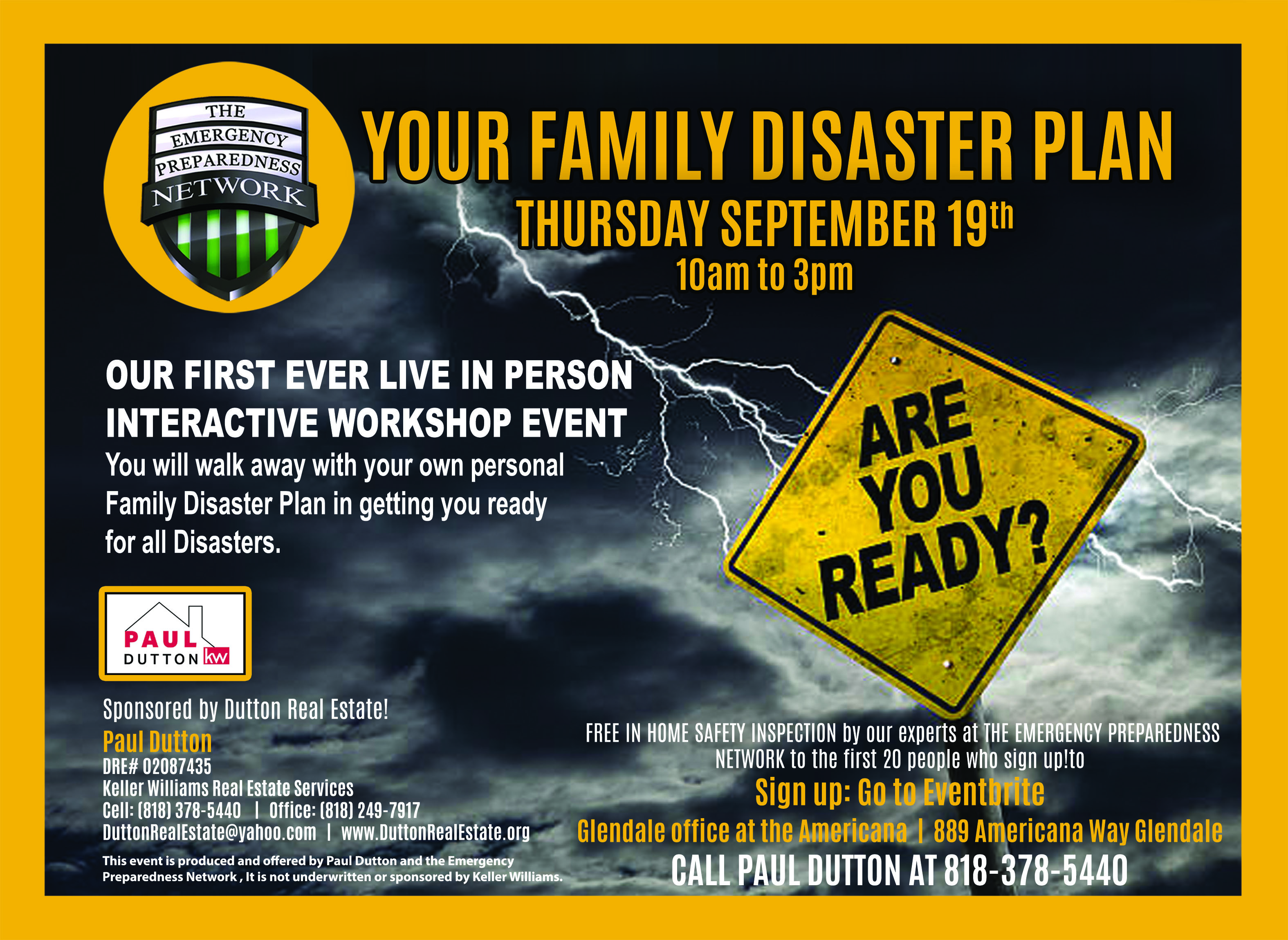
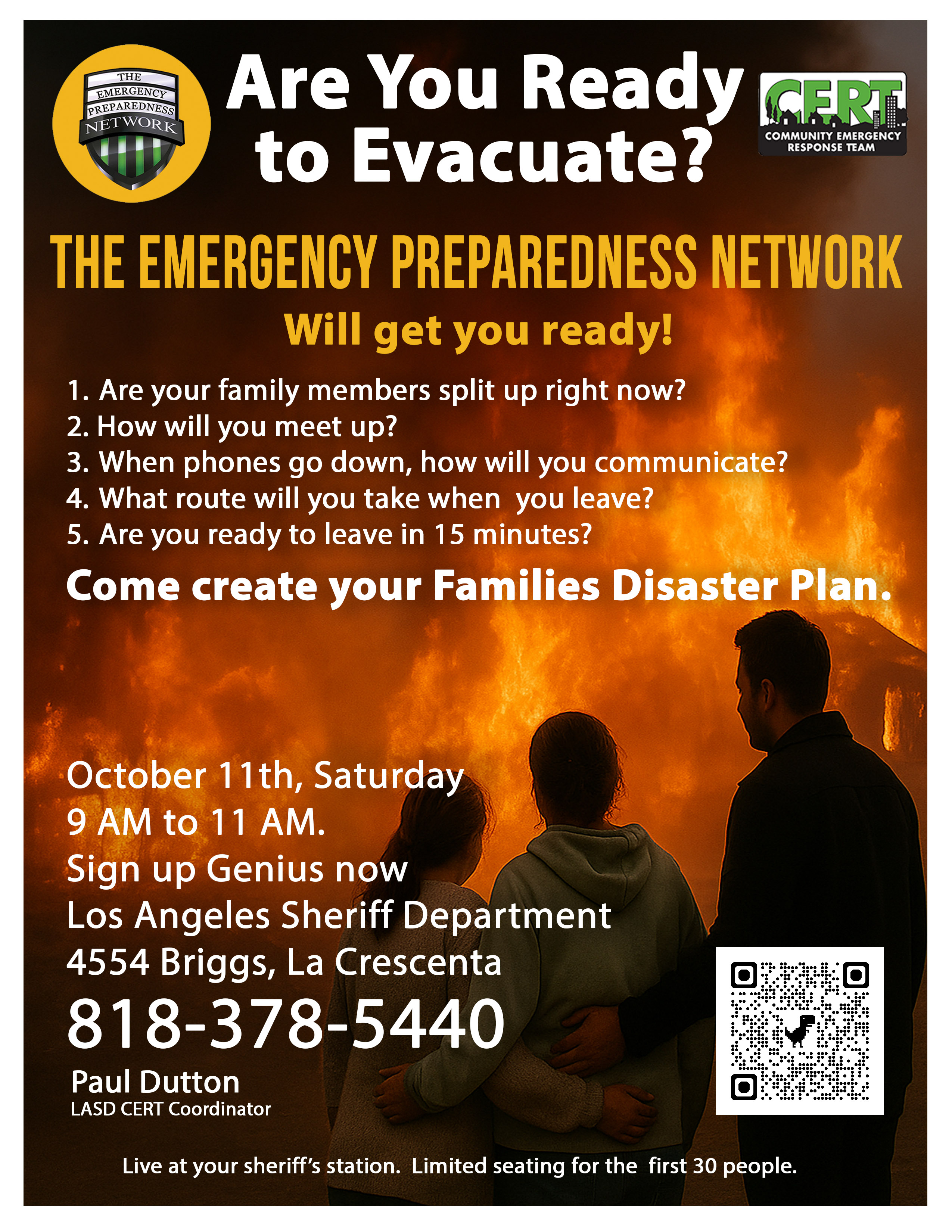
In Paul's live interactive seminars, attendees don't just take notes—they actively build, test, and walk away with their own customized Family Disaster Plans, Evacuation Plans, and Reunification Plans.
Paul integrates the frameworks of the American Red Cross and regional Community Emergency Response Teams (C.E.R.T) to cross-train corporate and civic teams in search and rescue, hazard mitigation, and family contact protocols.
- Why Preparedness Ahead of Time Matters
- Your Family Disaster Plans
- ICS Plans for your facility, your school, your campus, or your complex
- ICS Integration Across Entire Community Agencies for All Types of Disasters
- Emergency Evacuation Planning
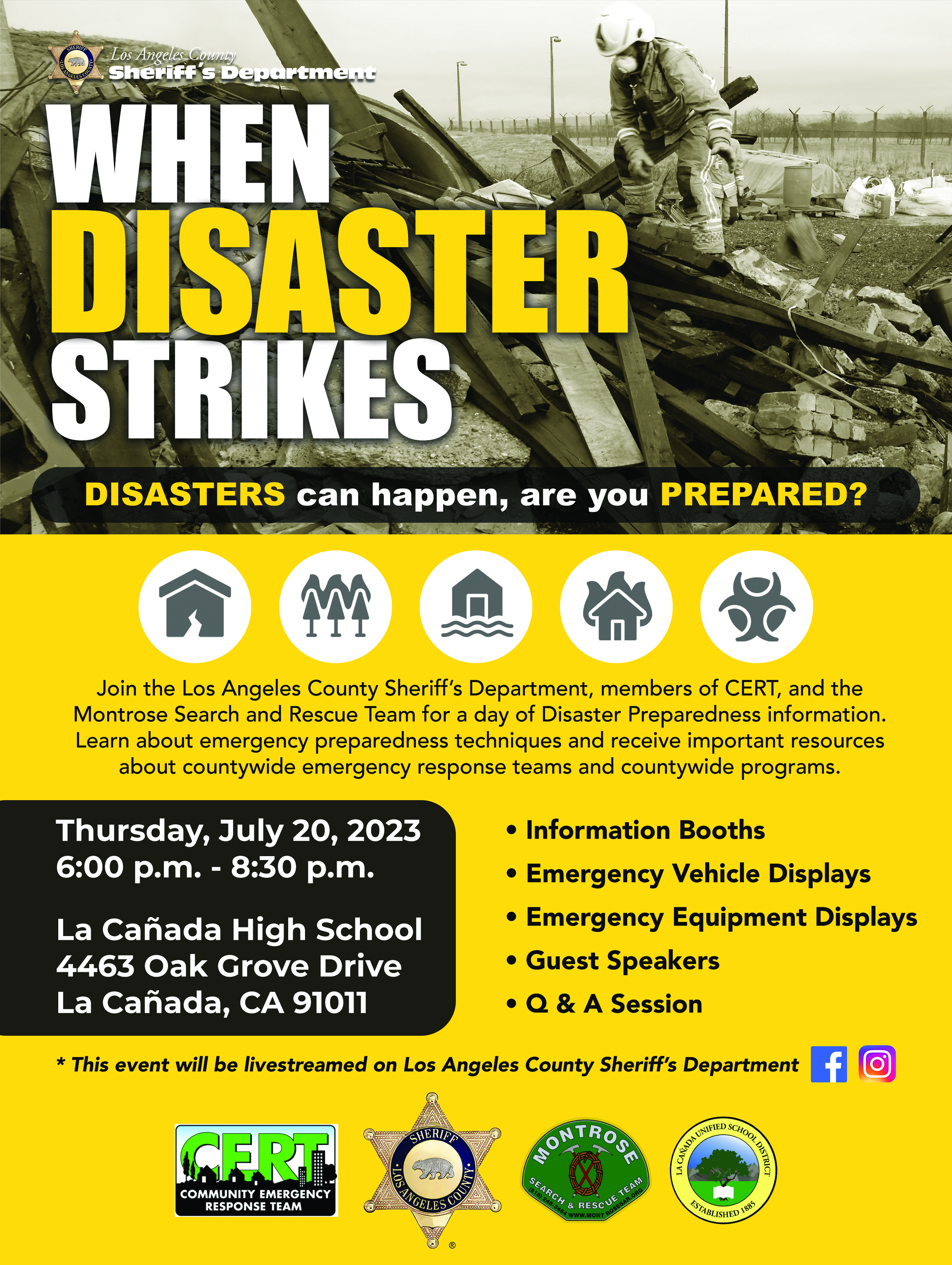
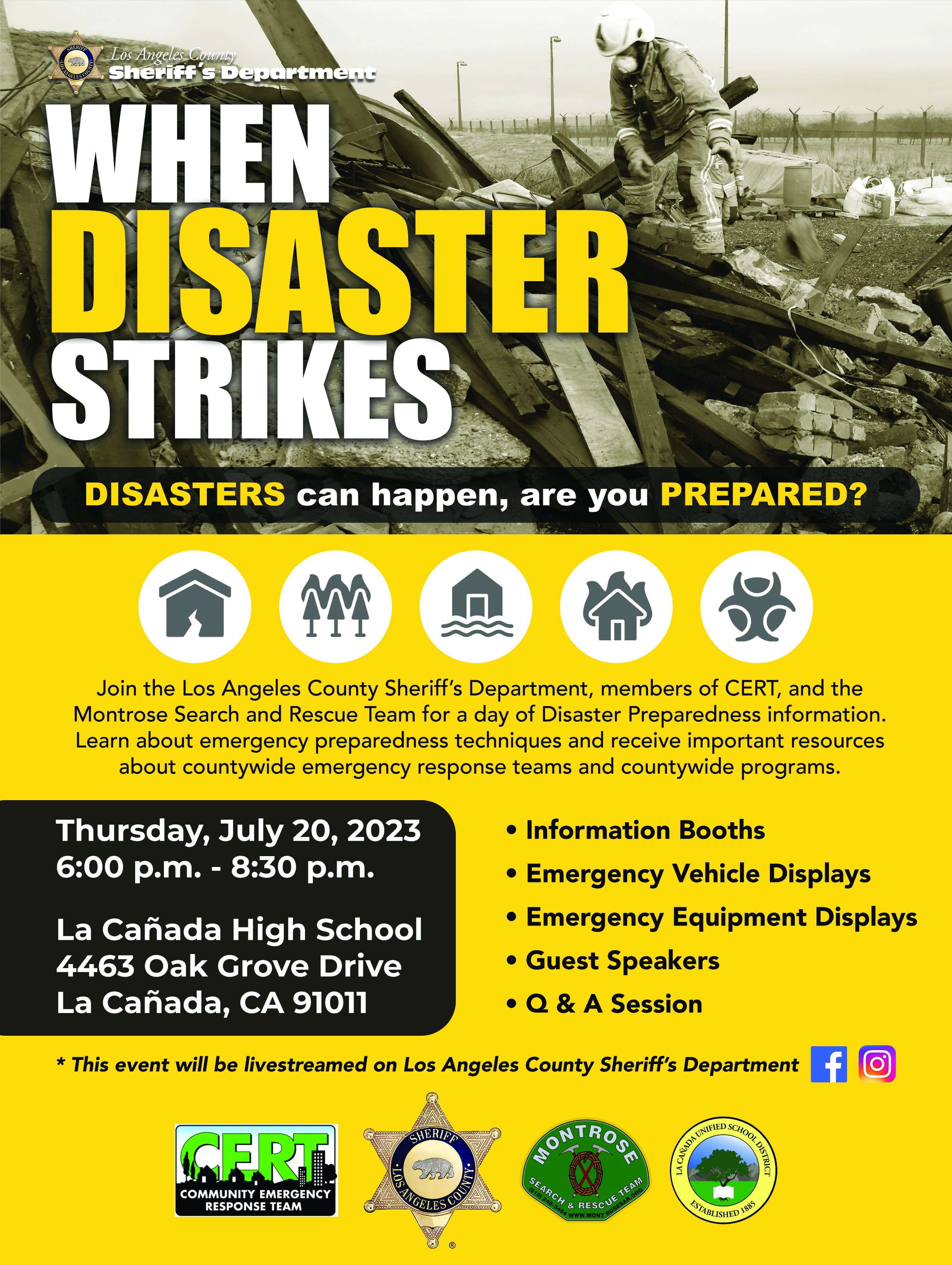
LA County "When Disaster Strikes" Live Seminar
Paul's work with the Los Angeles County Sheriff's Department (LASD) and Montrose Search and Rescue has culminated in historic public-safety events!
Red Cross & CERT Joint Conference
His landmark Red Cross & CERT Joint Conference in Pasadena pioneered regional cross-training, bringing together hundreds of volunteers, local emergency leaders, and disaster action panels into a single, cohesive strategic network.
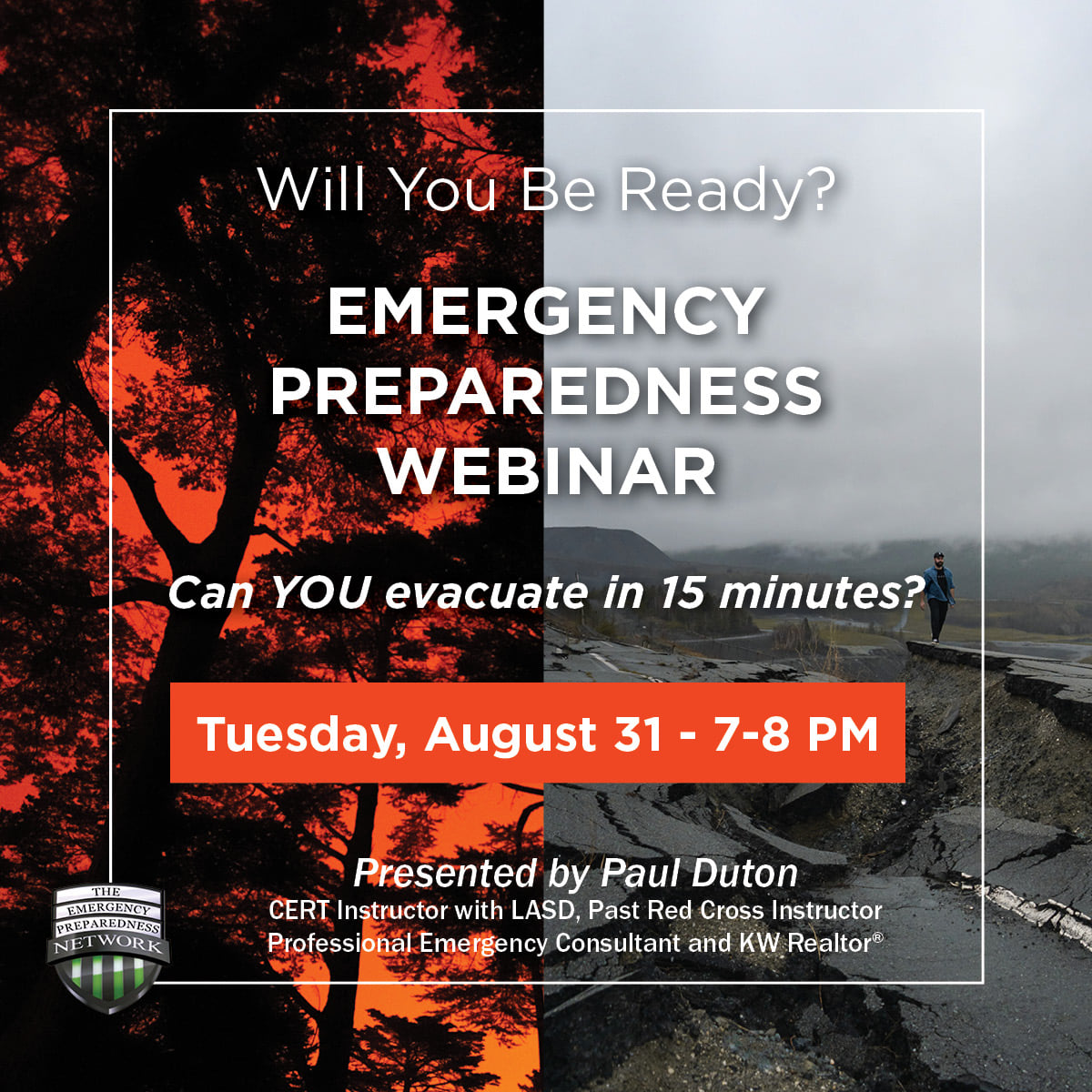
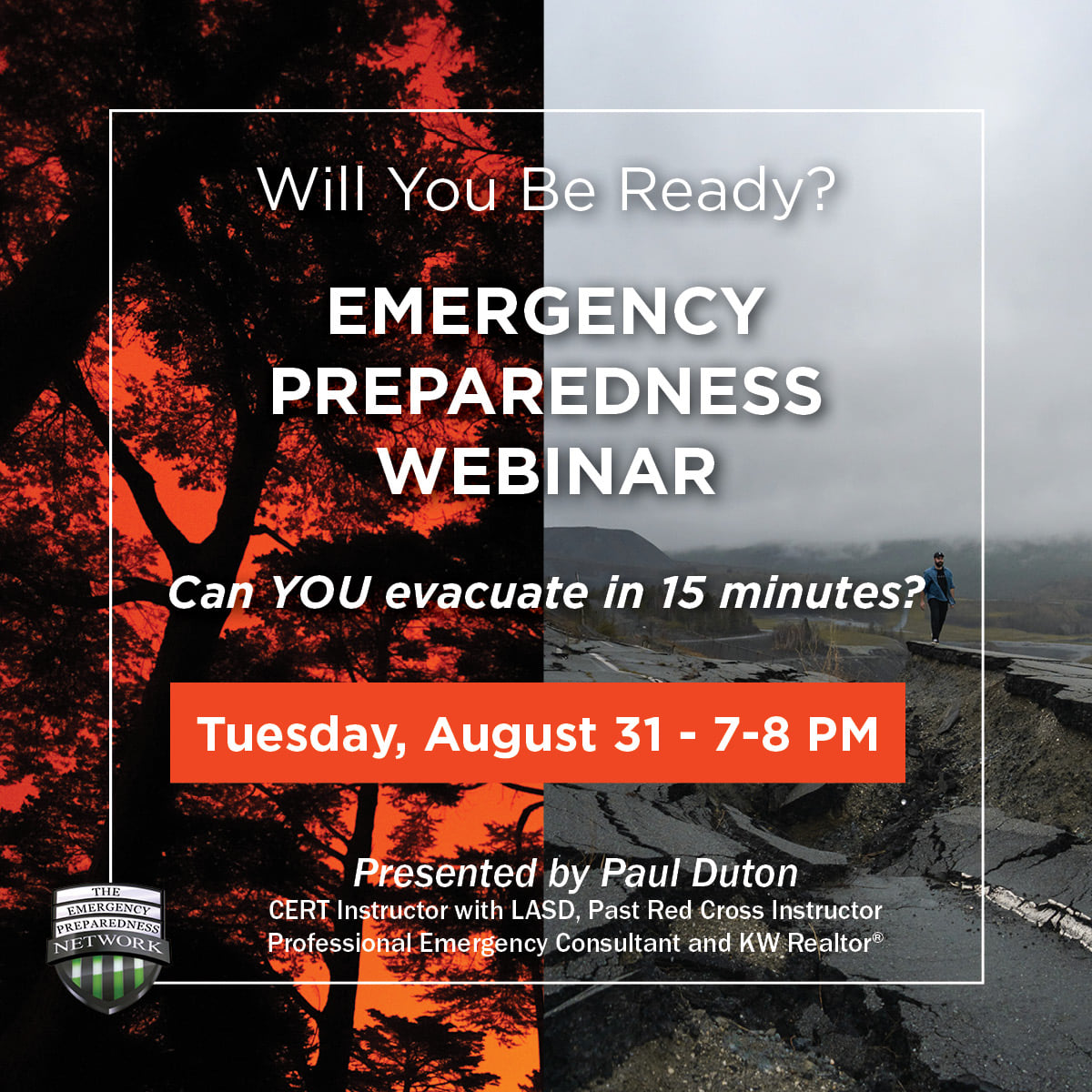
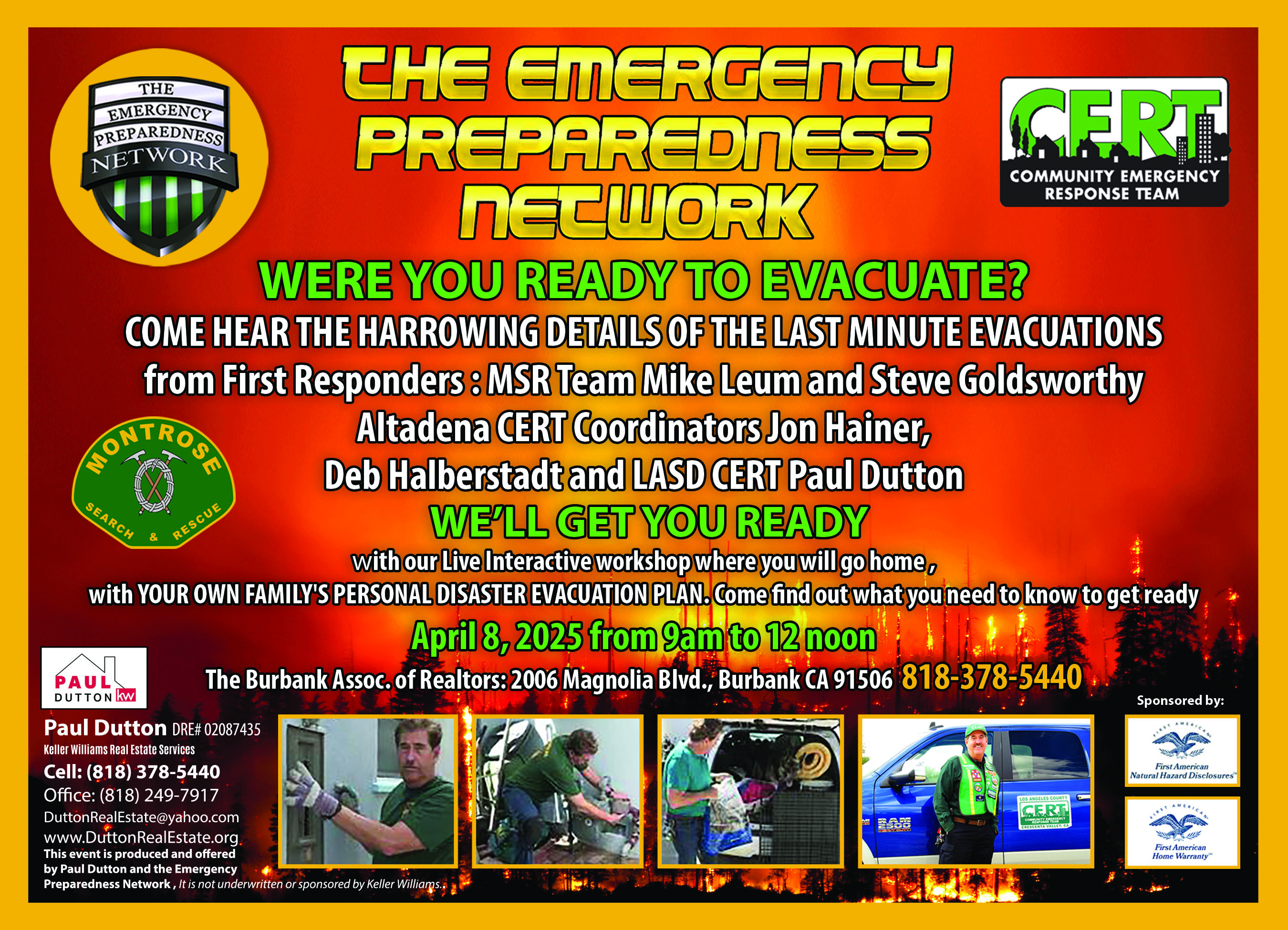
Emergency Preparedness Webinar: Can You Evacuate in 15 Minutes?
True, real-life evacuation stories from survivors and evacuation victims after the Eaton Fire in Altadena, CA. What it really takes to get ready ahead of time.
What Institutional Leaders & Safety Experts Say About Paul Dutton’s Impact.
“CERT teaches you that you always need to be prepared ahead of time. We all think, ‘It won’t happen here,’ but we’re in the land of La Crescenta. We have had hurricane force winds, we are home of the Station Fire, we have had power outages, Red Flag Warnings, debris flows and floods,” Dutton said. “If you don’t plan ahead of time you’re going to be stuck in a cold dark house.”
He stressed the community needs to be ready for the next disaster.”
Crescenta Valley Weekly Press Release, July 13, 2013
Contributed by LA Sheriff’s Department titled
“Emergency Preparedness Event Planned”
“The Duttons’ expertise has benefitted all of our district’s administrators and will subsequently have a positive impact on the lives of all of our students.”
Dr. Richard Sheehan, Former GUSD Superintendent
CV Weekly Article by Jason Kurosu titled
“CERT Comes to GUSD” July 4, 2013
“Paul [has] strong knowledge of NIMS, SEMS, ICS and ... strong relationships across the emergency management spectrum, including a [25]-year volunteer career with CERT.”
Tracy McBroom
Division Chief of Operations
American Red Cross National Headquarters
Secure Paul Dutton for Your Next Event or Training
Custom speaking dates, webinars, and training slots are available.
Initiate Booking RequestFrequently Asked Questions
What types of speaking engagements does Paul accept?
Paul regularly presents as a keynote speaker, panelist, and master workshop facilitator. He hosts corporate lunch-and-learns, school district board assemblies, municipal safety seminars, real estate association workshops, and live-broadcast public safety panels across California.
What is the interactive component of Paul's safety workshops?
Unlike standard static safety presentations, Paul's live seminars are fully interactive workshops. Attendees are actively guided in mapping out their own household's physical layouts, designating local meeting spots, establishing communication protocols and evacuation routes when cellular data is down. Setting up physical evacuation protocols [cite: 2, 3]. Every single attendee will walk away with a complete, written Family Disaster Plan [cite: 2].
Can Paul customize speaking topics for specialized industries?
Yes. Paul customizes his content to fit the specific risks and regulatory challenges of his audience. He delivers specialized keynote speeches and educational plans for school administrators (CSSP rules under Ed Code 32280). He delivers corporate emergency plans. He also provides public safety educational seminars to real estate brokerages and "public safety" staff.
Are virtual keynotes or webinars available?
Yes. Paul offers high-impact virtual webinars and live-broadcast emergency preparedness sessions. These digital workshops maintain the same rigorous, actionable standard of his physical events, providing virtual workforces and multi-site institutions with remote trainings and safety frameworks.
nAVIGATION
RESOURCES
LEGAL


© Copyright 2026. The Emergency Preparedness Network. All Rights Reserved.