Your Family Disaster Plan
Starts Now
"Let's Get You REady!"
Imagine you were at Camp Mystic in Texas and had only seconds to react to the flooding and move to higher ground, or you were caught up in the wildfires in Los Angeles and had only minutes to evacuate, or you received a tornado warning in the Midwest with less than an hour to react - in each of these situations, people had very little time to even react.
By preparing ahead of time, you can save your own life and your family's lives.
We can help you prepare ahead of time before disasters like this hit.
"Paul helps families move from panic to preparedness."
Family Disaster Plans
We offer courses to help families prepare
AHEAD OF TIME
so you can keep your family safe and secure when disaster strikes.
OVERVIEW OF COURSES
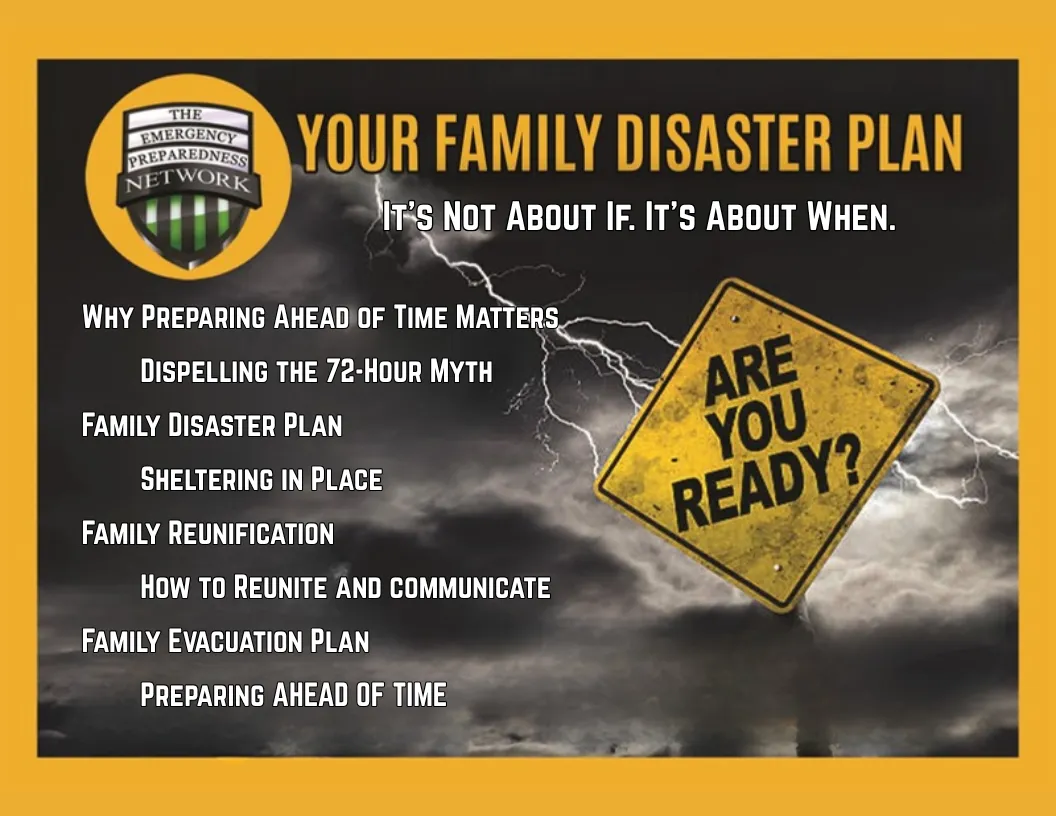
Phase 1: Why Preparing Ahead of Time Matters
Sorting through and solving the information overload
Dispelling the 72-hour Myth
You will become the First Responder for your family's safety
Phase 2: The 3 Plans for Family Disaster Readiness
Family Disaster Plan | Shelter in Place
Family Reunification Plan | Communications Plan
Family Evacuation Plan | Preparing ahead of time when it’s time to go
Phase 3: The Supplies Your Family Needs for all 3 Plans
A Shrinking Window
In the 1980s, the average time between billion-dollar climate disasters in the U.S. was 82 days. Recently, that window has shrunk dramatically to just 16 days.
Unprecedented Surge
The past three consecutive years (2023-2025) saw the highest numbers of billion-dollar disasters on record, causing billions in damage and displacing hundreds of communities.
Wildfire Reality
Wildfires have grown incredibly aggressive, with recent events out West, like the devastating Los Angeles fires, shattering records as the costliest individual wildfire events in history.
The Real Benefits of Being Prepared
Seconds Count
In the 1980s, the average time between billion-dollar climate disasters in the U.S. was 82 days. Recently, that window has shrunk dramatically to just 16 days.
Financial Resilience
In the 1980s, the average time between billion-dollar climate disasters in the U.S. was 82 days. Recently, that window has shrunk dramatically to just 16 days.
Community Strength
In the 1980s, the average time between billion-dollar climate disasters in the U.S. was 82 days. Recently, that window has shrunk dramatically to just 16 days.
"Don't wait for the warning sirens. True peace of mind comes from knowing that no matter what the horizon holds, your home and your loved ones are ready."
BUILD YOUR FAMILY DISASTER PLAN
ONLINE COURSE
PHASE 1
LIVE Webinar
Where do I start?
Dispelling the Myth of the 72-hour Kit
Why You’re Not Ready
Help is Not Coming
You Will Become the First Responder
The Cold Dark House
Problems with Infrastructure
The Compound Effect
Emergency Services Will be Overwhelmed
You’re on Your Own for 30 Days
PHASE 2
Family Disaster Plan
How to Get Ready
Utilities Shut-off
PHASE 3
Family Reunification Plan
How to Reunite
Family Communication Tools
PHASE 4
Family Evacuation Plan
Leaving Early Matters
Don't Wait Until it's Too Late
When to Leave
The First 2.5 Hours
What to Take When You Evacuate
In 15 Minutes
In 2 Hours
PHASE 5
Putting it all Together with Your Supply List
Your Family's Disaster Supplies
Grab and Go Bags
Family Disaster Kit
Family First Aid Kit
Grab and Go Bags
At Home
At Work
In Your Car
What Institutional Leaders & Safety Experts Say About Paul Dutton’s Impact.

“During the two decades I have known him, Paul has proven himself to be a dedicated leader working with the Los Angeles Sheriff’s Dept. as a Patrol volunteer and a county-wide instructor for the CERT program. In this latter capacity, he has taught literally thousands of individuals about Emergency Preparedness Management and training for CERT.”
Mack Duggar
35-year Red Cross Volunteer
Red Cross Incident Commander for Rose Parade, First Aid Services
nAVIGATION
RESOURCES
LEGAL


© Copyright 2026. The Emergency Preparedness Network. All Rights Reserved.